
The Future of Peripheral Neuropathy Treatment: What Might Be Coming?
Living with peripheral neuropathy can sometimes feel frustrating, particularly when symptoms continue despite treatment. Many people are told that current treatments focus mainly on symptom management rather than reversing nerve damage itself.
This reality can be disappointing. However, there is also reason for cautious optimism.
Around the world, researchers, neurologists, pharmaceutical companies, and medical technology specialists are working on new approaches to understanding, treating, and potentially repairing damaged nerves.
No one can promise a cure tomorrow. Research often moves slowly, and many promising treatments never reach patients. Yet compared with even ten years ago, scientists now understand far more about how nerves function, why they become damaged, and what might help them recover.
This article explores some of the most promising developments that could shape the future of peripheral neuropathy treatment.
Key Takeaways
- Researchers are learning more about how peripheral nerves repair themselves.
- New medicines are being developed to target nerve damage rather than simply mask symptoms.
- Gene therapies may eventually help certain inherited neuropathies.
- Advances in regenerative medicine could improve nerve repair.
- Artificial intelligence is helping researchers discover treatments faster.
- Improved diagnostic tools may allow earlier intervention.
- Progress is being made, but most developments remain in the research stage.
Why Current Treatments Have Limits
Many current neuropathy treatments focus on managing symptoms rather than repairing nerves.
Examples include pain-relieving medications, anti-seizure drugs, certain antidepressants, topical treatments, physical therapy, and lifestyle modifications.
These approaches can help improve quality of life, but they rarely restore damaged nerves.
One reason is that peripheral nerves are incredibly complex structures. Damage may involve the nerve fibres themselves, their protective coverings, blood supply, immune activity, and cellular energy production.
Researchers now understand that successful treatment may need to address several of these factors simultaneously.

Better Understanding of Nerve Regeneration
One of the most exciting areas of research involves understanding how nerves naturally repair themselves.
Unlike the brain and spinal cord, peripheral nerves do have some ability to regenerate.
The challenge is that regrowth is often slow, regeneration may be incomplete, long-standing damage becomes harder to repair, and scar tissue can interfere with recovery.
Scientists are studying the biological signals that tell nerves when and how to regrow.
If researchers can learn how to enhance these natural repair mechanisms, future treatments may be able to encourage more effective nerve regeneration.
This field alone could transform how neuropathy is treated over the coming decades.

Medicines Designed to Protect Nerves
Many future therapies aim to become neuroprotective.
This means protecting nerves before damage becomes permanent.
Researchers are investigating treatments that may reduce inflammation, improve blood flow to nerves, support cellular repair mechanisms, protect nerve cells from toxic damage, and improve mitochondrial function.
Several experimental compounds are currently being studied for their potential to slow progression of nerve damage.
For people diagnosed early, neuroprotective therapies could eventually become as important as symptom relief.
Regenerative Medicine and Stem Cell Research
Stem cell research often appears in media headlines and sometimes creates unrealistic expectations.
The reality is more complicated.
Researchers are exploring whether stem cells could support nerve regeneration, reduce inflammation, improve healing environments around damaged nerves, and release growth factors that stimulate repair.
Some early studies have shown encouraging results.
However, major challenges remain involving safety, effectiveness, consistency, cost, and regulatory approval.
Most experts believe stem-cell-based treatments for neuropathy remain several years away from routine clinical use.
Nevertheless, regenerative medicine continues to be one of the most closely watched areas of neuropathy research.
Growth Factors and Nerve Repair Proteins
Healthy nerves rely on naturally occurring substances called growth factors.
These proteins help nerves survive, grow, repair damage, and maintain normal function.
Researchers have spent years trying to develop treatments based on these growth factors.
Earlier attempts faced difficulties because delivering the proteins safely and effectively proved challenging.
New technologies are now improving drug delivery methods, raising hopes that future therapies may successfully harness these natural repair signals.
Gene Therapy
Gene therapy is one of the fastest-moving areas of modern medicine.
While many forms of peripheral neuropathy are not inherited, some are caused by specific genetic mutations.
Examples include Charcot-Marie-Tooth disease, hereditary sensory neuropathies, and other rare inherited nerve disorders.
Gene therapies aim to correct faulty genes, silence harmful genes, or replace missing genetic instructions.
Several neurological conditions are already seeing success with gene-based treatments.
Although widespread neuropathy applications remain in development, progress elsewhere in medicine provides reason for optimism.
Immune-Based Treatments
Some neuropathies occur because the immune system mistakenly attacks nerves.
Examples include CIDP and certain autoimmune neuropathies.
Researchers are developing increasingly targeted immune therapies.
Future treatments may suppress only harmful immune responses while preserving healthy immune function.
This could significantly improve treatment effectiveness and reduce side effects.
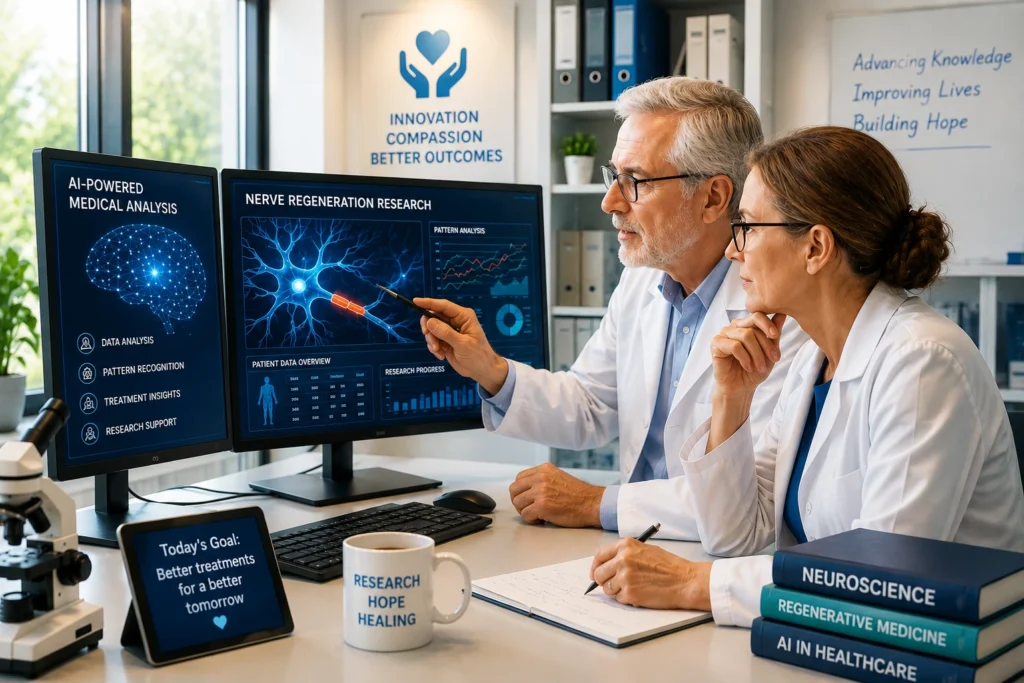
Artificial Intelligence and Drug Discovery
Artificial intelligence is beginning to accelerate medical research.
Traditionally, developing a new drug can take many years and cost enormous amounts of money.
AI systems can now analyse vast datasets, identify treatment targets, predict drug interactions, discover promising compounds faster, and assist with clinical trial design.
Many experts believe AI-assisted drug discovery will become increasingly important during the next decade.
Improved Diagnostic Technology
Future treatment success may depend heavily on earlier diagnosis.
Many people currently spend months or even years seeking answers before receiving a diagnosis.
Researchers are developing tools that may detect nerve damage earlier, identify underlying causes more accurately, monitor disease progression, and measure treatment response more precisely.
Earlier diagnosis often provides a better opportunity to slow or prevent further damage.
Personalised Medicine
Not all neuropathy is the same.
Two people with similar symptoms may have completely different underlying causes.
Future medicine is increasingly moving towards personalised treatment.
Rather than offering similar therapies to everyone, doctors may eventually use genetic information, biomarkers, and detailed nerve assessments to tailor treatment plans to the individual.

What About a Cure?
This is the question many people ask.
The honest answer is that there is currently no universal cure for peripheral neuropathy.
There may never be a single cure because peripheral neuropathy is not one disease. It is a broad group of conditions with many different causes.
The future is therefore more likely to involve earlier diagnosis, better prevention, more effective symptom control, slower disease progression, improved nerve repair, and personalised treatment plans.
For some specific causes of neuropathy, disease-modifying treatments may eventually emerge.
Reasons for Hope
People living with neuropathy today often feel that medical progress moves too slowly.
That feeling is understandable.
However, there are genuine reasons for cautious optimism.
Researchers now know far more about nerve biology than they did a generation ago.
Advances in genetics, immunology, regenerative medicine, artificial intelligence, and diagnostic technology are creating opportunities that simply did not exist twenty years ago.
Final Thoughts
When you live with peripheral neuropathy, it is easy to focus on current limitations.
Yet medical science continues to move forward.
No one can predict exactly which research areas will produce the next major breakthrough. Some promising approaches may fail, while unexpected discoveries may emerge from entirely different directions.
For now, the most practical approach remains working closely with your healthcare team, managing symptoms as effectively as possible, staying physically active within your abilities, and keeping informed about genuine advances in research.
The future may not bring a single miracle cure, but there is growing hope that people diagnosed with peripheral neuropathy in the years ahead will have more treatment options than ever before.
Start Here :
Start Here – What Is Peripheral Neuropathy?
Medical Disclaimer
This article is for educational and informational purposes only and should not be considered medical advice. Always consult your doctor, neurologist, or healthcare professional regarding symptoms, diagnosis, treatment options, or changes to your healthcare plan. Medical knowledge changes over time, and treatment decisions should always be based on your individual circumstances and professional medical guidance.
If you experience new symptoms, worsening symptoms, falls, sudden weakness, or concerns about your health, seek professional medical advice promptly.